Life In Dayton Valley, NV: Neighborhoods And Homes
May 7, 2026
May 7, 2026
Looking for more space, a quieter setting, and a home base that still keeps you connected to Carson City and the wider Northern Nevada market? Dayton Valley stands out for exactly that reason. If you are trying to figure out what daily life feels like here, which parts of the area may fit your goals, and what kinds of homes you can expect to find, this guide will walk you through the basics with a local, practical lens. Let’s dive in.
Dayton Valley is part of the Dayton area in Lyon County, where planning documents describe the community as having grown from a mining and ranching area along the Carson River corridor into a master-planned golf community and a bedroom community for Carson City and Reno. That mix still shapes the area today. You can feel both the open-land heritage and the newer residential growth when you drive through the community.
The area has also grown noticeably in recent years. Dayton’s population increased from 8,964 in 2010 to 15,153 in the 2020 Census, which helps explain why more buyers are taking a close look at the market here. For many people, Dayton Valley offers a balance that can be hard to find elsewhere in Northern Nevada.
Another part of the appeal is ownership. ACS 2020-2024 data shows a 79.9% owner-occupancy rate in Dayton, which is higher than Carson City at 62.3% and Reno at 49.8%. That does not tell you everything about a community, but it does point to a market with a strong base of people who own and stay.
Dayton Valley tends to feel more residential and open than a tighter suburban grid. Lyon County planning notes that much of the Carson River floodplain in the Dayton area lies south of the river, where ranch and agricultural land helps provide flood storage capacity. In everyday terms, that helps explain why the area often feels shaped by open space, river corridor land, and wider views.
If outdoor access matters to you, that is a real part of the lifestyle here. Dayton State Park sits on the Carson River at the foot of the Virginia Range, 12 miles east of Carson City on US-50. The park includes camping, picnicking, hiking, and fishing, and the river corridor is also associated with kayaking, rafting, and hiking in the area.
This location also supports a practical work-life setup for many buyers. County planning describes Dayton as a bedroom community for nearby Carson City and Reno, and the documented US-50 connection makes Carson City especially straightforward. ACS 2020-2024 shows a mean commute time of 30.8 minutes, which supports Dayton Valley’s role in the Northern Nevada commuter corridor.
Lyon County planning identifies four distinct Dayton neighborhood areas: Old Town, the south side of the river, the Sutro area, and the Mark Twain area. Each one contributes something different to how the broader Dayton market functions. If you are comparing homes in Dayton Valley, it helps to understand these larger patterns.
Old Town is described in county planning documents as a small-scale, pedestrian-friendly historic core with mixed-use structures and narrow streets. This part of Dayton reflects the community’s longer history and offers a different feel than newer residential sections. If you like an established setting with a traditional small-town pattern, this area may stand out.
The south side of the river is expected to keep adding residential development as master-planned communities continue to build out. That makes this area important for buyers who want newer housing options or neighborhoods with a more planned residential layout. It is also part of why Dayton continues to attract people looking for room to grow without moving too far from regional job centers.
The Sutro area functions as a community retail hub. For buyers, that can mean convenient access to everyday services and a location tied to commercial activity. It plays more of a support role in daily life, but that matters when you are evaluating convenience and drive times.
County planning describes the Mark Twain area as a sprawling residential section. That broader footprint can appeal to buyers who want a neighborhood setting that feels less compact. It is another example of how Dayton does not read as a one-style-fits-all market.
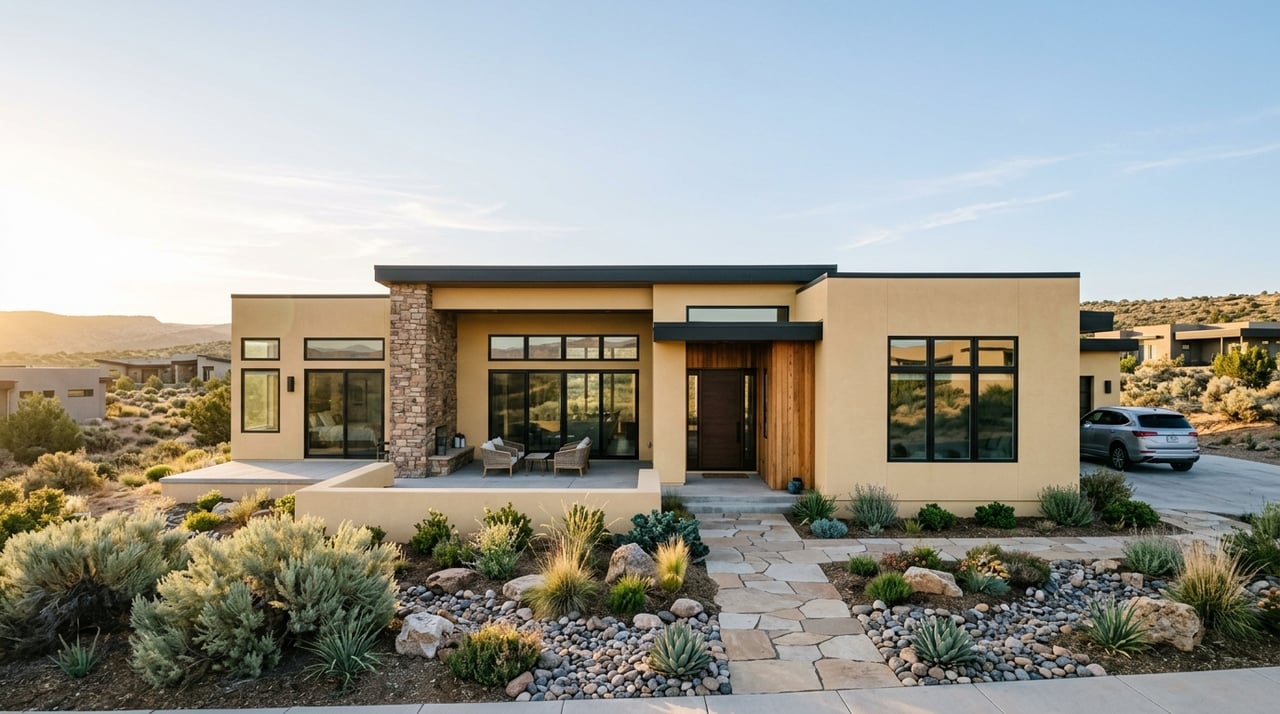
One of the biggest strengths of Dayton Valley is housing variety. Official subdivision and parcel records show that the area includes golf-course homes, conventional subdivision homes, and larger-lot ranchette-style properties. That range gives buyers more flexibility than they may expect if they only know Dayton by name.
The housing mix can be especially helpful if you are trying to match a home to your day-to-day priorities. Some buyers want lower-maintenance living in a planned neighborhood. Others want more elbow room, larger parcels, or a property that supports a different kind of lifestyle.
Lyon County planning commission records describe Dayton Valley Country Club as a planned unit development with a private golf course. That gives a clear basis for talking about golf-course living in the area. If you are drawn to a neighborhood with a more structured community layout and a golf-oriented setting, this is one of the defining housing options in Dayton Valley.
Representative parcel records show homesites in Dayton Valley Country Club can be around 0.149 acre. That suggests a more compact subdivision format compared with larger-lot parts of the market. For some buyers, that can mean a simpler property footprint with a neighborhood-focused feel.
Dayton Valley also includes more traditional subdivision neighborhoods such as Riverpark and North Pointe. Representative parcel examples show Riverpark at about 0.39 acre and North Pointe at about 0.80 acre. Those examples help illustrate that even within subdivision-style housing, lot sizes can vary quite a bit.
That variation matters when you are comparing listings. Two homes may both be in planned neighborhoods, but the lot size, spacing, and overall feel can be very different. Looking beyond square footage and price is often where the best decision gets made.
If land is high on your list, Dayton Valley also offers larger parcels. Dayton Valley Ranchettes includes representative parcel sizes around 5 acres, which is a very different experience from a golf-course or standard subdivision lot. These properties can appeal to buyers who want more privacy, more usable outdoor space, or a stronger connection to the area’s rural roots.
For relocators especially, this is often where Dayton Valley stands apart. In one market area, you can move from smaller lots in a golf community to conventional neighborhood homes to acreage-style properties. That makes Dayton Valley worth a serious look if your housing needs are specific.
For many buyers, Dayton Valley’s appeal is not only about lifestyle. It is also about where your budget may go further within the region. ACS 2020-2024 shows a median owner-occupied home value of $433,200 in Dayton, compared with $453,000 in Carson City and $548,300 in Reno.
That does not mean every home in Dayton Valley is inexpensive, and it does not replace a current market analysis. Still, the comparison supports a value-oriented view of the area for buyers who want to remain in the Carson City or Reno orbit without immediately stepping into Reno-level home values. For first-time buyers, move-up buyers, and relocators, that can make Dayton Valley an important market to compare.
Based on county planning and Census context, Dayton Valley often makes sense for buyers who want a quieter and more residential setting with outdoor recreation nearby. It can also be a strong fit if you need a commute-friendly location tied to Carson City and the wider Northern Nevada market. The area is not isolated, but it also does not feel as dense or as built-out as larger neighboring cities.
You may find Dayton Valley especially appealing if you want:
For sellers, these same traits can help shape how your property is positioned. Buyers are often not just choosing a house here. They are choosing a blend of space, access, and a more grounded pace of life.
Because Dayton Valley includes several distinct neighborhood patterns, it helps to start with lifestyle priorities before you focus only on specs. Think about how much land you want, how important commute routes are, and whether you prefer a planned neighborhood or a more spread-out setting. Those answers can narrow your search quickly.
It is also smart to compare properties in context rather than in isolation. A home in a golf-course development, a home in a conventional subdivision, and a home on acreage may all serve very different goals even if the prices look similar at first glance. The right fit usually comes down to how you want to live day to day.
That is where local guidance matters. When you understand the neighborhood pattern, parcel type, and broader Dayton context, you can make a more confident decision and avoid chasing homes that do not truly match your needs.
If you are thinking about buying or selling in Dayton Valley, working with a team that understands Northern Nevada neighborhood differences can make the process much smoother. The Feist Group offers practical guidance, local insight, and full-service support for buyers, sellers, and relocations across the region.
We pride ourselves in providing personalized solutions that bring our clients closer to their dream properties and enhance their long-term wealth. Contact us today to discuss all your real estate needs!

THE FEIST GROUP
1674 US HIGHWAY 395 N MINDEN NV 89423