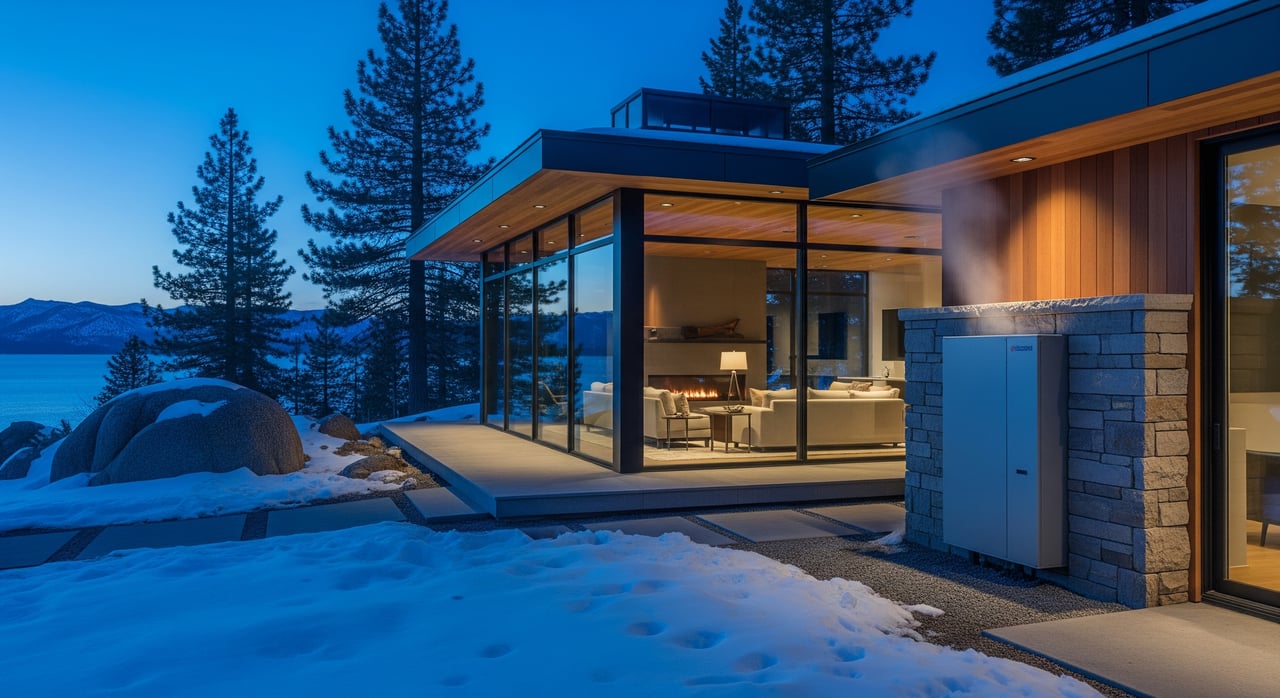
Heat Pumps That Work In Stateline, NV’s Alpine Climate
October 16, 2025
October 16, 2025
Wondering if a heat pump can really keep a Stateline home warm through Tahoe winters? You are not alone. With frequent freeze nights and deep snow, it is smart to question what works at 6,200 feet. In this guide, you will learn which heat pumps are built for alpine conditions, how to design and install them for reliable heat, what permits and rebates to expect, and how this affects your home plans. Let’s dive in.
Stateline sits around 6,200 to 6,300 feet on the south shore of Lake Tahoe, with winters that bring regular subfreezing nights and meaningful snowfall. Elevation and cold air raise the bar for heating equipment. You need systems that hold capacity at low temperatures and are set up to handle wind, frost, and snow. Local climate context is clear in summaries for Stateline and the Tahoe basin, including elevation and winter patterns (Stateline overview).
For heat pumps, this means choosing cold-climate models and paying attention to siting, snow clearance, and defrost behavior. Industry guidance for cold regions stresses proper equipment selection, airtightness, and duct design to keep performance stable in freezing weather (cold‑climate selection guidance).
Modern inverter systems labeled as cold-climate are designed to maintain useful capacity in single digits and below. Many are listed on NEEP or ENERGY STAR cold-climate lists and are built for low ambient operation. Brands market models that run near or below zero, with efficiency that stays well above resistance heat in the cold (cold‑climate selection guidance).
Ductless systems deliver zoned comfort and strong efficiency. Popular cold-climate lines, such as Daikin Aurora and similar options, are engineered for low temperatures and include features to manage frost and drain ice (example low‑ambient model). For whole-home heating, design and placement matter, especially with multi‑zone systems that share one outdoor unit.
If you prefer a central system that uses existing ductwork, variable-capacity cold-climate split systems are a solid path. They can serve the whole house with one air handler while keeping low-ambient performance. Duct condition and leakage become very important in alpine settings.
Geothermal systems pull heat from the ground, so winter efficiency stays high even during cold snaps. They can fully replace combustion heat in alpine climates. The tradeoff is higher upfront cost and site constraints that can be challenging on Tahoe-area lots.
Ask for a Manual J heat load and Manual S/D for equipment and ducts. In cold climates, wrong sizing can lead to short cycling or unnecessary backup heat use. Local building guidance references ACCA methods for HVAC design and expects permitted installs to follow them (HVAC sizing and permits).
Every home has a balance point, the outdoor temperature where the heat pump alone cannot meet the load. Cold-climate models push that point lower, but you should plan for a small backup heat source for the rare extremes or faster recovery after deep cold.
Backup can be electric resistance, a small gas unit, or baseboards in a few rooms. Advanced controls that pre‑heat before cold snaps can reduce resistance use and keep comfort steady, which is helpful during storms.
Defrost cycles are normal in Tahoe winters. You may notice short intervals of cooler supply air while the outdoor coil defrosts. Manufacturers continue to refine defrost logic to improve comfort (defrost behavior research).
For siting, raise the outdoor unit above typical snow depth, keep it clear of roof melt paths, and avoid direct exposure to prevailing winds. Many cold-climate condensers offer base‑pan heat or heated drains to prevent ice buildup (example low‑ambient model).
Compare SEER2 and EER2 for cooling, and HSPF2 for heating. Look for Cold-Climate ENERGY STAR or models on NEEP’s lists, which include low-temperature capacity data used by designers and rebate programs (cold‑climate selection guidance).
Air sealing and insulation are key. Tightening the envelope reduces required capacity, lowers operating cost, and shrinks reliance on backup heat. In tight homes, plan for balanced ventilation to protect indoor air quality (whole‑house performance context).
Schedule pre‑winter and spring service, keep snow cleared from the condenser, and confirm local service availability for your brand. Check warranty terms and register equipment after install.
Expect a mechanical or building permit for most HVAC upgrades in Douglas County, plus inspections at rough and final. Ask your contractor who will pull the permit and how they will document ACCA design steps for the county (HVAC sizing and permits).
When you interview installers, ask:
Federal tax credits under the Energy Efficient Home Improvement Credit can apply to qualifying heat pumps. Review current Form 5695 instructions and model requirements before you buy (IRS Form 5695 guidance).
Nevada is launching Home Energy Rebates programs that may offer substantial heat pump incentives, with rules that can change as programs roll out. Start with the Nevada Governor’s Office of Energy for current eligibility, contractor enrollment, and pre‑approval steps (Nevada program overview). Many programs require specific efficiency levels and approved contractors, and stackability can vary, so confirm details in writing before placing deposits.
Installed costs vary by home and system type, from modest single‑zone ductless installs to full‑house ducted or geothermal systems that can reach the tens of thousands. Incentives can reduce out‑of‑pocket cost and improve payback (cost context and savings).
For buyers, a well‑designed cold‑climate heat pump can deliver quiet comfort and efficient heat through typical Tahoe winters. When you tour homes, ask for recent permits, Manual J documentation, model numbers, and details about backup heat and outdoor unit placement.
For sellers, upgrading to a modern cold‑climate heat pump can improve everyday comfort and market appeal. Clear documentation, visible snow clearance measures, and transferable warranties help buyers feel confident about year‑round performance.
Ready to talk through options as you plan a move or prep a listing in Stateline or the Carson Valley? Reach out to The Feist Group for local guidance and a thoughtful plan that fits your goals.
We pride ourselves in providing personalized solutions that bring our clients closer to their dream properties and enhance their long-term wealth. Contact us today to discuss all your real estate needs!

THE FEIST GROUP
1674 US HIGHWAY 395 N MINDEN NV 89423