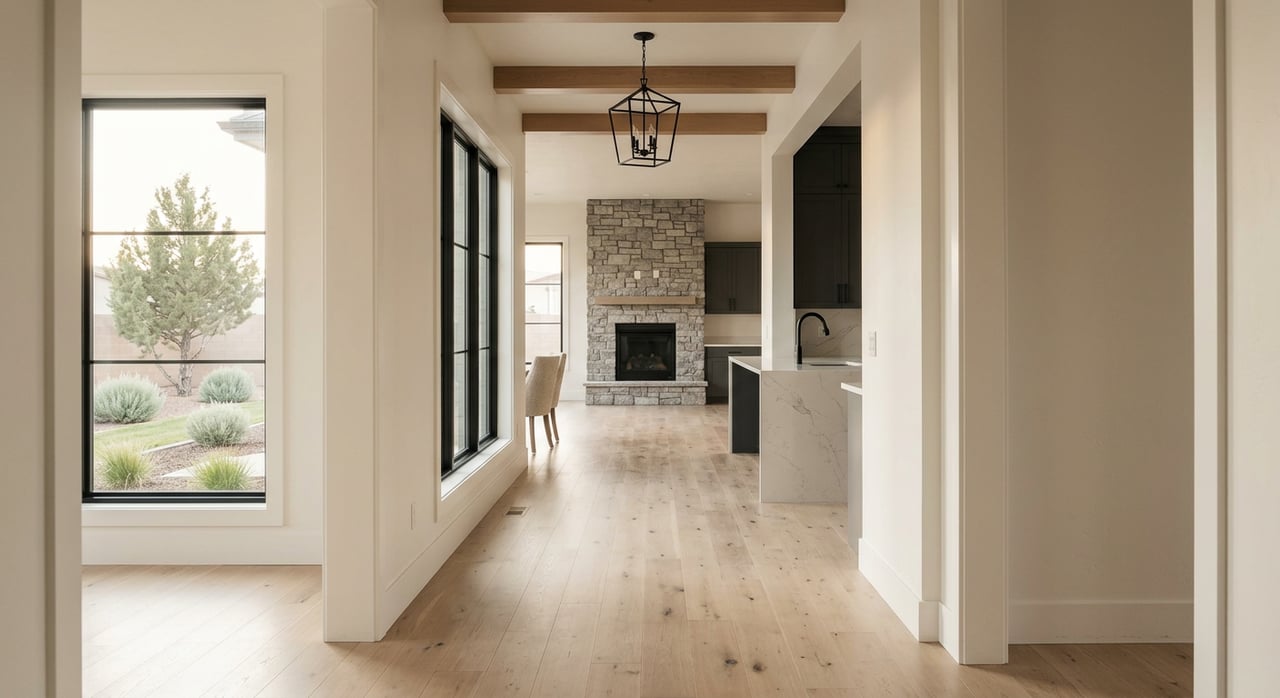
Gardnerville New Construction Vs Resale Home Guide
March 5, 2026
March 5, 2026
Torn between a shiny new build and a character-rich resale in Gardnerville’s 89460? You are not alone. Choosing the right path affects your budget, timeline, lot size, and long-term maintenance. This guide gives you local context, clear comparisons, and a simple checklist so you can decide with confidence. Let’s dive in.
Recent data sources show wide variation on pricing for 89460. Some providers have reported listing medians in the high 800Ks while others show mid 500Ks to around 600K depending on the timeframe and method. These differences come from how each source defines the area and whether the data is list or closed sale price. A local MLS analysis is your most accurate snapshot for a specific neighborhood and lot.
New construction in the Carson Valley tends to be small to medium communities and semi-custom builds instead of large master plans. You will see compact infill near town and larger estate-style options on the valley floor. County fee updates and permit timelines can influence build schedules, so factor that into planning. Local reporting confirms fee adjustments that affect budgets and timing, which you can review in the county news on building fees and plan review changes at the Record-Courier. For background, see the county’s recent fee update coverage in the Record-Courier (building fees increased 14 percent) at this local report.
New homes are advertised with a base price. You typically add upgrade packages, lot premiums for views or cul-de-sacs, and landscaping. In Gardnerville, compact new homes can start in the low to mid 400Ks, while larger semi-custom builds and premium lots often reach the 800Ks to 1M-plus range. Resale homes bundle past upgrades and mature landscaping into the list price and may offer negotiation on price or repairs.
Quick-move-in or spec homes can close in about 30 to 90 days. Production builds often take 3 to 6 months once permits are in place. Semi-custom or builds with longer-lead items can stretch to 6 to 18 months or more. County review times and inspections can extend schedules, so if you need to move fast, resale or a true spec home is usually your best fit.
Gardnerville offers a wide range of lot options. You will find compact lots with homeowners associations near town and larger subdivisions with 1-acre sites in select areas. Some communities have HOAs with modest dues, while other parcels show no HOA. Match your priorities, like yard size, potential for an RV bay or workshop, and proximity to daily needs, with the specific lot and community rules.
New construction typically means lower near-term maintenance, modern mechanicals, and better energy performance. Early life cosmetic issues can still pop up, which is where warranties matter. Resale homes can come with older systems and deferred maintenance, but you benefit from seeing how the property performs over time and you can negotiate repairs or credits.
Municipal inspections focus on code. Independent inspections protect you. A common approach includes pre-drywall, a final inspection before closing, and an 11-month inspection to catch items before many one-year workmanship warranties expire. Always confirm in writing that your builder allows these milestones. For a helpful overview, see this guide to new construction inspection stages from Inspection Response.
Most builders follow a version of the 1-2-10 model. That often means one year for workmanship and finishes, two years for distribution systems like plumbing and electrical, and 10 years for major structural defects. Ask whether the structural coverage is backed by a third-party insurer and review the claim process, exclusions, and transfer rules. Learn more about typical warranty structures through StrucSure’s FAQ.
Nevada law provides construction-defect procedures under NRS Chapter 40. For example, NRS 40.672 outlines a builder’s duty to repair certain reported defects within a defined window after written notice. The statute also defines what counts as a “constructional defect.” If issues arise, keep detailed written communication and follow the required notice steps. You can read the statutory repair framework at NRS 40.672.
Before signing a builder contract, review:
If you plan to use an agent, register them with the builder early so your representation is preserved. Consider a real estate attorney for complex custom builds or nonstandard contract language.
Large parts of the Ranchos area are served by the Gardnerville Ranchos General Improvement District for water and many sewer lines, with wastewater treatment through Minden-Gardnerville Sanitation District. Some parcels may be on wells or septic. Confirm service boundaries, hookup fees, and any planned rate adjustments with the utility. Start with the GRGID website.
Douglas County has adjusted building and plan review fees. Fee updates and plan-check capacity can affect both budgets and delivery timelines. For current context, review the county fee update report in the Record-Courier.
Parts of the Carson Valley sit near the Carson River and its tributaries. Check FEMA flood maps for any lot you are considering. If a property lies in a Special Flood Hazard Area and you use a federally regulated mortgage, flood insurance may be required. Search your parcel at the FEMA Map Service Center.
Many new communities have HOAs with monthly dues. HOAs and CC&Rs can guide exterior paint, fencing, RV storage, and accessory structures. If amenities are promised, review the timeline for completion. Read the full CC&Rs before committing so you understand the rules and any builder control period.
You can buy a completed spec home with a standard mortgage. For build-to-order or custom, lenders offer construction loans with draws or single-close construction-to-permanent loans that convert to a mortgage at completion. These products have different rates, approvals, and inspection schedules. A clear overview of options is available in this construction loan guide.
Appraisers rely on comparable sales. High-cost custom upgrades that go beyond neighborhood norms might not appraise for their full cost. If you plan significant upgrades, discuss appraisal risk and whether funds can be handled outside the loan. For tips on balancing upgrades with financing, review these mortgage insights on new builds.
Use this quick list before you sign anything:
If you are weighing new construction against a resale in Gardnerville’s 89460, you deserve clear numbers, realistic timelines, and a plan to reduce risk. Our team pairs deep Carson Valley roots with inspection and escrow know-how so you get practical advice at every step. We will help you compare total cost of ownership, evaluate lots and utilities, structure inspections and warranties, and coordinate the right financing path. Ready to navigate your options with a calm, experienced guide? Connect with The Feist Group to Schedule a Free Consultation.
We pride ourselves in providing personalized solutions that bring our clients closer to their dream properties and enhance their long-term wealth. Contact us today to discuss all your real estate needs!

THE FEIST GROUP
1674 US HIGHWAY 395 N MINDEN NV 89423